
Everyday Korean Food in Seoul: Gimbap, Convenience Store Ramyeon, and Gukbap
Everyday Korean food in Seoul, from gimbap and convenience store ramyeon to bowls of gukbap, is attracting more attention from international visitors. Recent tourism data from the Korea Tourism Organization (KTO) shows particularly strong growth in spending on convenience store food. The Korea Tourism Organization (KTO) looked at foreign-issued credit card spending from 2018 through July 2025 and found convenience store food among the fastest-growing categories.
This guide covers what that data shows, which everyday dishes are worth trying first, and a few details that make ordering easier.

What the Korea Tourism Organization Data Shows
KTO’s Tourism Data Lab tracked the average annual growth in spending by foreign-issued credit cards across different food categories. Ice cream grew 35.0% a year, convenience store food 34.0%, and croffles and waffles 25.5%.
A growth rate says how fast spending rose, not how much was spent. The volume figures are a separate point: convenience stores logged about 13 million foreign card transactions between January and July 2025, the highest of any K-food category KTO tracked. In the same report, July spending on noodles and dumplings was up 55.2% from a year earlier, and gamjatang (pork bone stew) was up 44%.
KTO also checked social media. Of the posts about Korean convenience stores, 40.1% were about food, and ramyeon was the most common keyword at 14.1%.
These are card payments only, so they say nothing about cash. They also cover visitors in general, not just Seoul. Still, the dishes below are the ones the report points to.
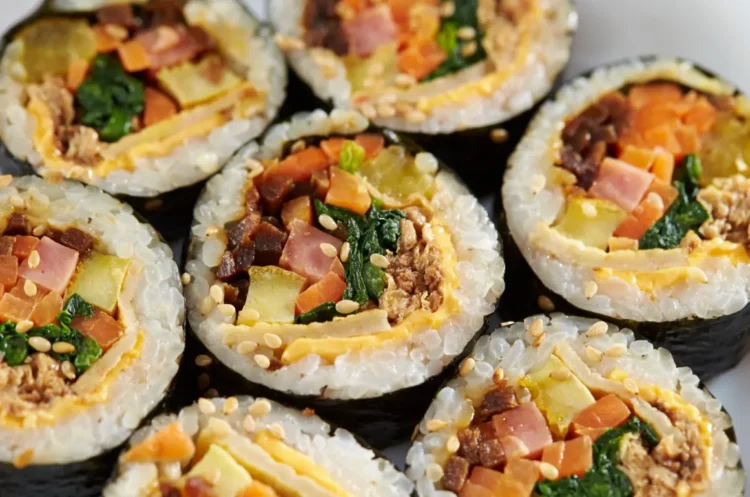
Gimbap
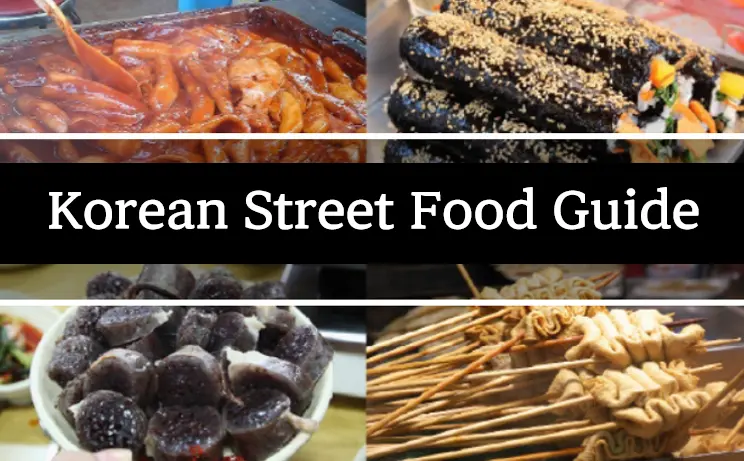
Gimbap is rice and fillings rolled in dried seaweed and sliced into rounds. Fillings vary by shop, but egg, pickled radish, and vegetables are common, often with ham, fish cake, or beef. KTO’s report names it as one of the everyday foods drawing attention, and coverage of the report used a still from the drama Extraordinary Attorney Woo, in which gimbap appears, to illustrate the trend.
You can find it at neighborhood snack shops, where rolls are made to order, and at convenience stores in the triangle-shaped version (samgak gimbap). The triangle version is wrapped so the seaweed stays dry until you pull the plastic tabs open. It’s an easy option if you want to try a little Korean food without sitting down for a full meal.
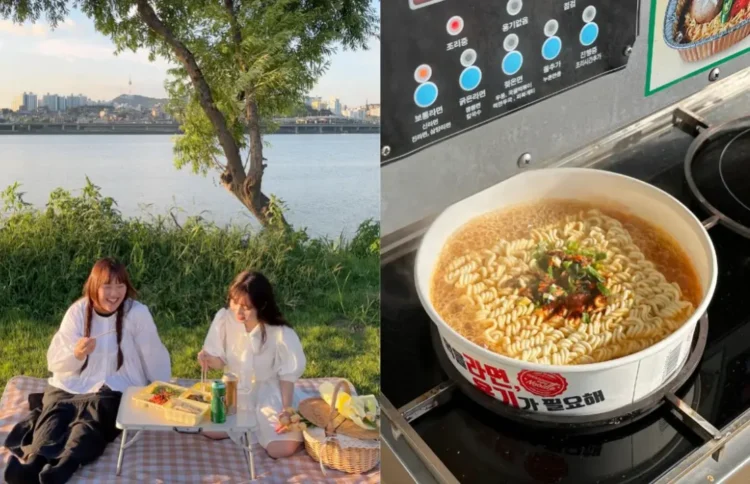
Ramyeon at the Convenience Store
Convenience stores in Seoul sell instant ramyeon with a cooking machine nearby, and some stores near the Han River have them outdoors. You simply buy a packet of ramyeon, prepare it using the store’s cooking machine, and eat it right there.
The process, with some variation between stores:
- Pick a ramyeon packet or a ready-made ramyeon set at the register or shelf.
- Add toppings if you want them. Eggs and cheese are common choices.
- Put the noodles and seasoning in the container the store provides and set it in the machine.
- Start the machine, which adds water and cooks the noodles for a few minutes. Some machines prompt you to stir partway through.
- Take the container out with care, since the broth is very hot.
One place built around this is CU’s Ramyun Library in Hongdae, which opened in December 2023. >Korea.net reported that the machine instructions there are printed in English, Chinese, and Japanese. An early sales report said foreign customers accounted for 62% of the store’s ramen sales, and that they bought an average of 3.4 packets per visit against 1.2 for Korean customers.
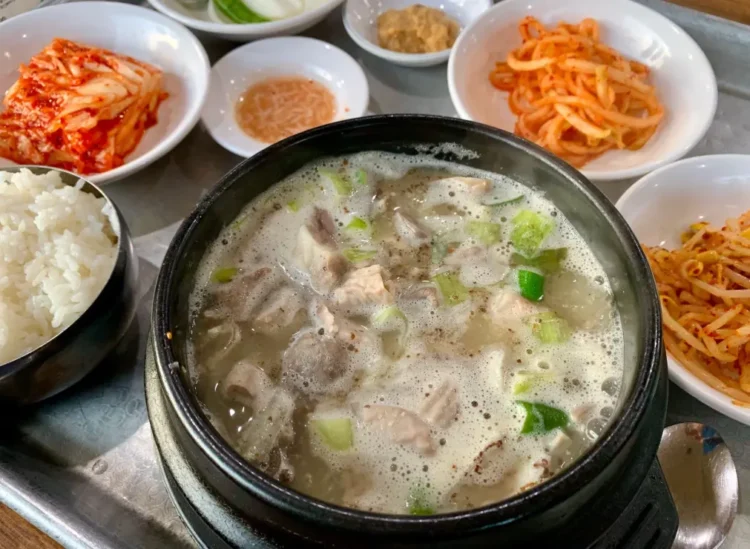
Gukbap and Other Hot Bowls
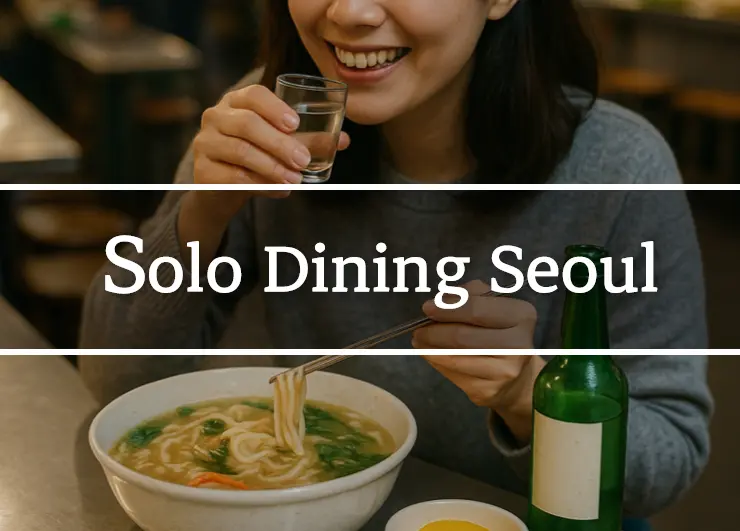
Gukbap means rice served in a hot soup. Sundae-gukbap, with Korean blood sausage, is one version, and there are others built on pork, beef, or bean sprouts. The Korea Times reported in 2024 that foreign diners were getting more interested in gukbap after seeing it in popular media.
Blood sausage is the part most visitors hesitate over. Many shops serve the sausage alongside the soup or let you order a version with other cuts of pork. These bowls arrive in a stone or earthenware pot and stay hot for a long time, so give the first spoonful a minute.
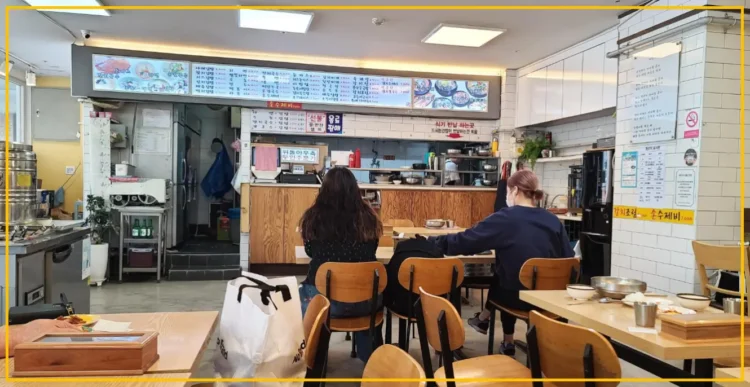
Snack Shops Like Kimbap Cheonguk
Kimbap Cheonguk is a chain of casual snack restaurants, recognizable by its orange signs. One menu typically covers gimbap, ramyeon, tteokbokki, kimchi stew, and pork cutlet, which helps when a group can’t agree on one dish.
Traditional markets work the same way. Gwangjang Market and Mangwon Market have stalls selling knife-cut noodle soup (kalguksu), tteokbokki, and mung bean pancakes (bindaetteok).
A Few Practical Notes
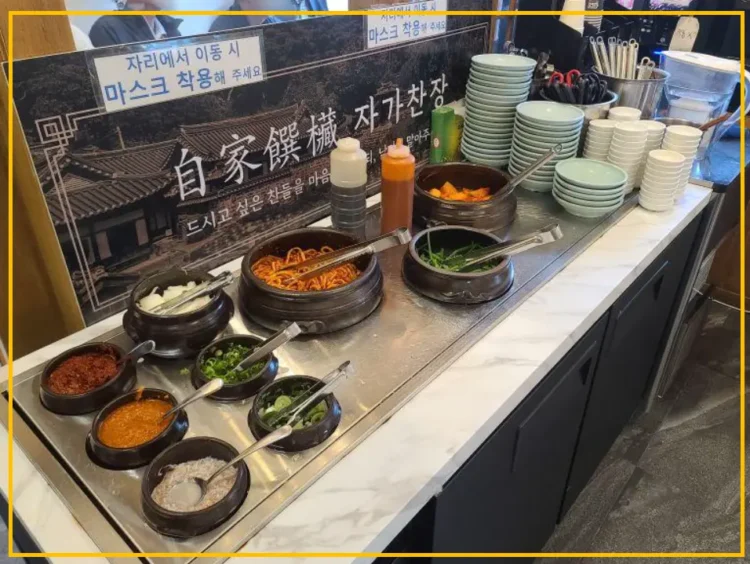
- Side dishes. Many restaurants bring small side dishes (banchan) like kimchi and pickled radish with the main order, and refills are often free. At some places you serve yourself from a counter, so look around before asking.
- Water. Self-service water is common at casual restaurants. Check for a cooler or a pitcher near the door.
- Spice. Everyday Korean food is not all spicy. Gimbap, kalguksu, and seolleongtang (a milky beef bone soup) are mild.
- Stews. Anything served in a stone pot will keep boiling at the table.
Many convenience stores in Seoul stay open around the clock, so the first try can wait until the evening, after a day of walking. An evening visit is also a good chance to see the range of quick meals and snacks available in Korean convenience stores.
Recommended Reading: