Seoul Subway Rules 2026: Food, Drinks, and Luggage Etiquette for Travelers
Taking the Seoul subway with a coffee in hand or a large suitcase can raise a few questions, especially if you’re visiting South Korea for the first time. The rules aren’t the same for buses and subways, and some restrictions are easy to misunderstand.
Here’s what travelers should know about food, drinks, luggage, and everyday subway etiquette in Seoul.
Food & Drink Rules: Bus vs. Subway
One common source of confusion for tourists is the difference between food and drink rules on Seoul’s city buses and subway trains.
| Feature | Seoul City Buses | Seoul Metro (Subway) |
|---|---|---|
| Food and drink restrictions | Restrictions apply to certain items and containers | No blanket ban on all food and drinks |
| Takeout coffee | Boarding may be refused depending on the container | Generally permitted, but spills should be avoided |
| Bottled water | Subject to bus boarding rules | Generally acceptable |
| Eating food | Restrictions apply to certain items | Strong-smelling or messy food is best avoided |
What Is Allowed on the Subway?
Seoul’s subway system does not generally apply the same blanket restrictions to food and drinks as city buses do. However, the subway operator’s terms of use may restrict items that create unpleasant odors or inconvenience other passengers.
Here’s how to handle common situations:
- Generally acceptable: Bottled water, thermos flasks, and tumblers with secure lids.
- Use caution: Takeout coffee and iced drinks. Keep the lid secure and hold the cup carefully, especially on crowded trains or when the train is moving.
- Best avoided: Hot meals, fried chicken, hamburgers, tteokbokki, and other foods that produce strong odors or leave crumbs and spills.
A practical tip: Even when bringing a drink aboard is permitted, eating a full meal on a crowded train can make other passengers uncomfortable. Keep food packed away when possible, and avoid anything likely to spill or leave a lingering smell.
Luggage Rules: Size Limits and Restrictions
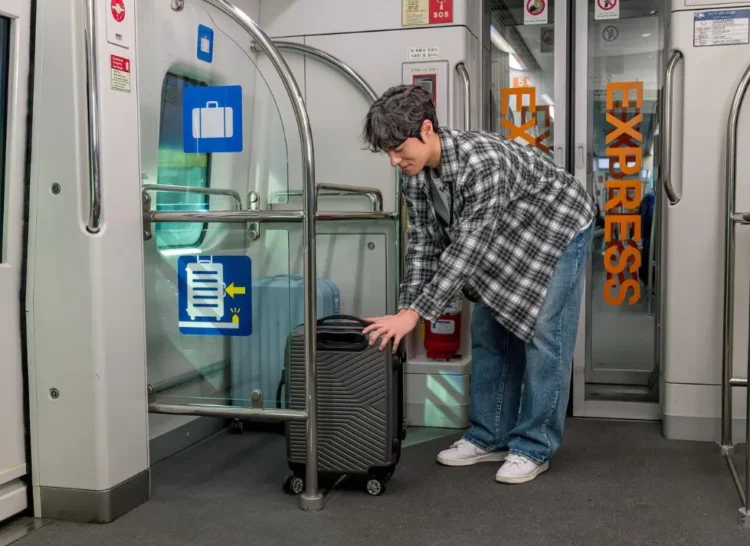
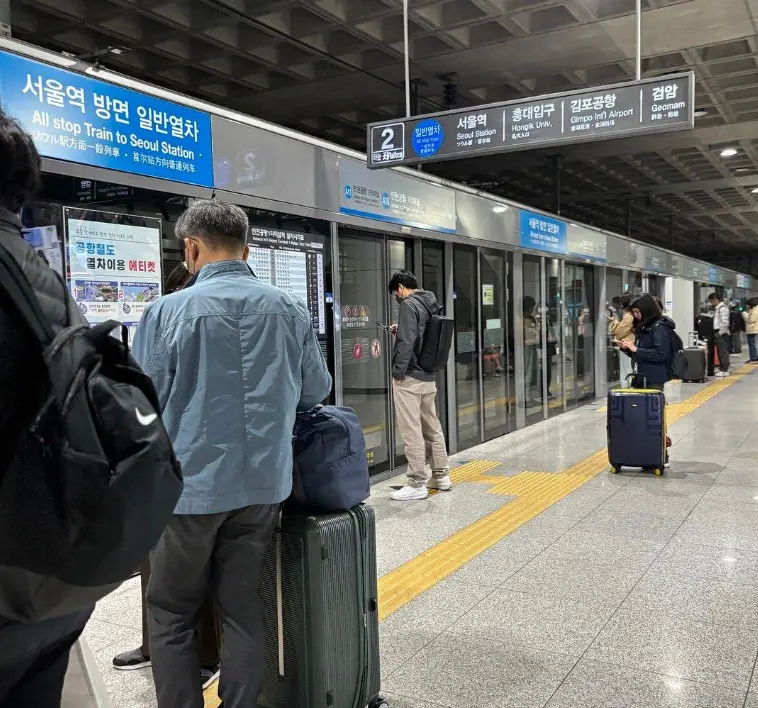
Large suitcases are common on Seoul subway trains, particularly on routes connecting the city with Incheon International Airport (ICN) and Gimpo Airport (GMP).
Official Luggage Limits
Before relying on a specific size or weight limit, check the current rules published by the relevant subway operator. Requirements for checked airline baggage do not necessarily apply to subway travel, and a baggage allowance used by one transport service should not automatically be treated as a subway regulation.
For most travelers, the more immediate concern is whether a suitcase can be moved safely through stations and crowded train cars.
Standard large suitcases can take up considerable space, especially during rush hour. If you’re traveling with an unusually large or heavy bag, confirm the applicable restrictions before setting out.
Practical Luggage Etiquette for Travelers
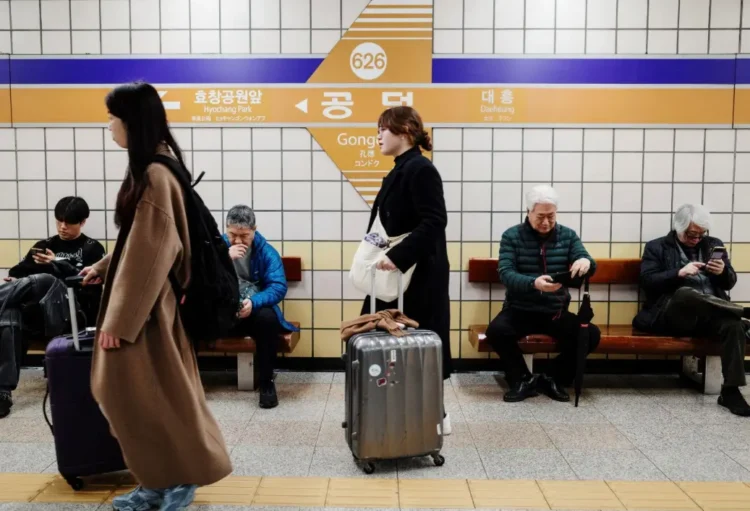
Even when a suitcase is permitted, keeping it out of other passengers’ way makes the journey easier for everyone.
1. Master Luggage Placement Onboard
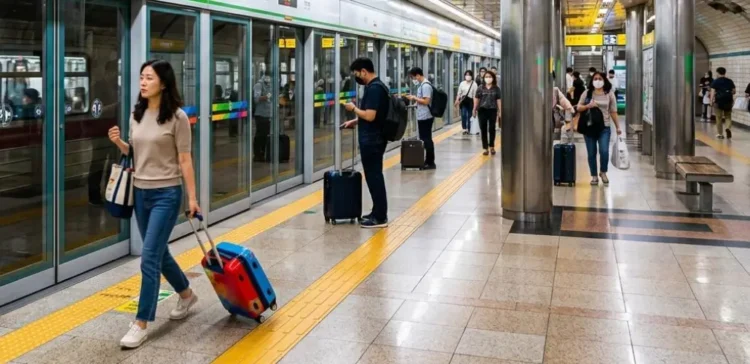
- Keep doorways clear: Avoid standing directly in front of train doors. Move farther into the carriage when space is available, and allow other passengers to get on and off.
- Keep your suitcase close: Stand with the bag beside or in front of your legs so it doesn’t roll into the aisle or bump into other passengers.
- Use overhead racks carefully: If a train has an overhead rack, use it only for luggage you can lift and secure safely. Heavy suitcases are better kept on the floor beside you, where they won’t fall or injure someone.
2. Mind the Peak Rush Hour
Traveling with a large suitcase is more difficult when commuter trains are packed. Weekday mornings and evenings are generally the busiest periods, particularly on major routes serving central Seoul and popular transfer stations.
If your schedule is flexible, consider traveling outside rush hour.
If you need to reach or leave an airport during a busy period, the Airport Railroad Express (AREX) may be worth considering, depending on your departure and destination stations. A taxi is another option if you have several bags, although travel time and cost can vary considerably with traffic.
3. Use Station Elevators Wisely
Elevators can make it much easier to navigate Seoul’s subway stations with large suitcases, strollers, or other bulky items. However, the available routes and elevator locations vary by station, so check the station layout in advance if you need step-free access.
On escalators, keep a firm grip on your suitcase and maintain control of its movement. Do not leave a heavy bag unattended on a step, where it could fall or strike another passenger. If handling the suitcase on an escalator feels unsafe, use an elevator instead.
Articles you might find helpful:
👉 Incheon Airport to Seoul at Night: Late-Night Bus Routes, Fares, and Where to Board
👉 How to Use Kakao T Without a Korean Phone Number
Frequently Asked Questions (FAQ)
Q1: Can I drink water or coffee on the Seoul subway?
Water in a closed bottle or tumbler is generally acceptable. Takeout coffee is also generally permitted, but keep the lid secure and handle the cup carefully to avoid spills. Rules for particular containers or circumstances may vary.
Q2: Is there an extra fee for bringing luggage on the subway?
Ordinary luggage generally does not require a separate ticket. However, if you’re carrying an unusually large or heavy item, check the current rules of the operator serving your route rather than assuming that airline baggage limits apply.
Q3: Are strollers and bicycles allowed on Seoul subways?
Strollers are generally accommodated on Seoul’s subway system, although station accessibility and the space available on a train can vary.
Bicycle access is subject to operating rules, which may differ by service, day, and bicycle type. Folding bicycles may be subject to different conditions from full-size bicycles. Check the relevant operator’s current guidance before traveling with a bike.
Summary Checklist for Travelers
- Buses vs. subways: Check the rules for your specific service before boarding with open drinks or takeout food.
- Luggage: Confirm any applicable restrictions for unusually large or heavy bags, and don’t assume airline baggage limits apply to subway travel.
- Rider etiquette: Keep suitcases close, leave doorways clear, and avoid eating messy or strongly scented food on crowded trains.
- Station access: Check elevator locations in advance if you’re traveling with a large suitcase or stroller.
- Bicycles: Verify the operator’s current rules before bringing a bicycle onto the subway.
A little planning goes a long way. Keep your belongings secure, leave room for other passengers, and check any restrictions that apply to your journey before boarding.