
Korean Convenience Store Food Combinations to Try in Korea
Korean convenience store food combinations take ordinary items, such as cup ramen, triangle kimbap, string cheese and instant tteokbokki, and mix them into something the packaging never suggests. Most need only a microwave and a few minutes. I found my first one by accident, when a cup of Buldak ramen turned out to be much hotter than I expected and a store employee fixed it with a triangle kimbap and a stick of cheese.
What to Buy Before You Start
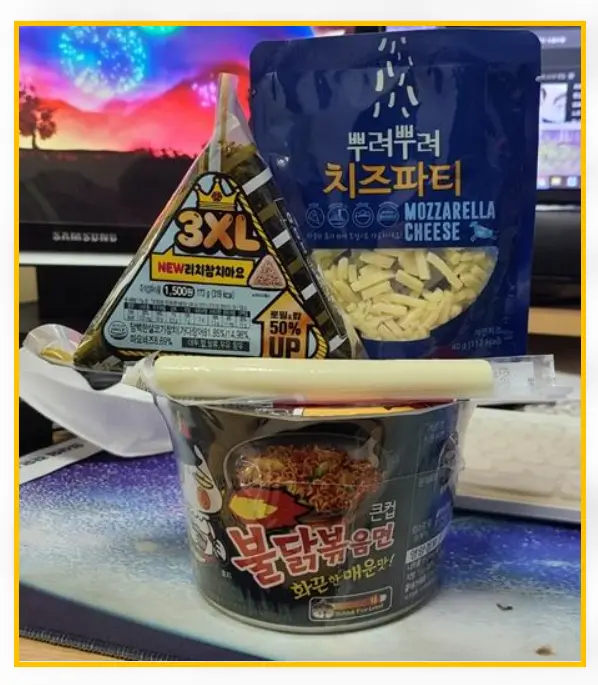
A cup of ramen, a triangle kimbap, string cheese and a pack of instant tteokbokki cover most of the recipes below. Sausage and dumplings show up in a couple of them. If you plan to make the Buldak recipe, the Korea Herald recommends the tuna mayo kimbap flavor, and it’s the one I’d pick too.
Buldak Ramen With Triangle Kimbap and Cheese
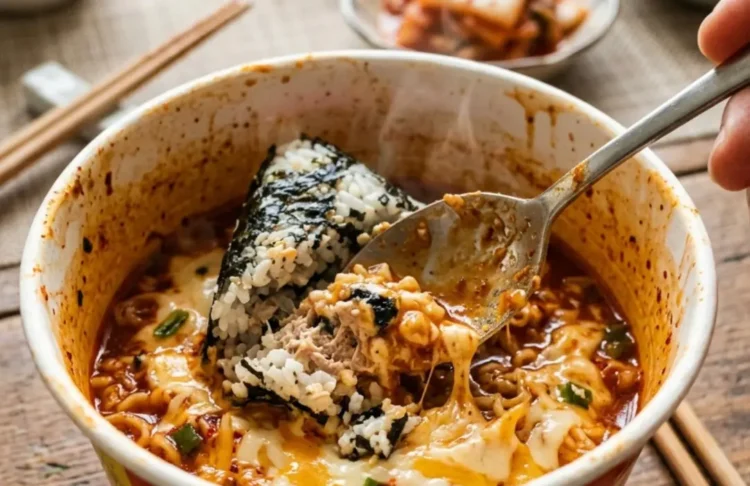
I took on a cup of Buldak ramen thinking I could handle it. The heat hit fast, and I stood there with my mouth burning. A store employee who had been watching brought over a tuna mayo triangle kimbap and a stick of string cheese, mixed both into my cup, and ran it in the microwave for 40 seconds. The sauce went from sharp to creamy. It tasted closer to a rosé risotto than to the ramen I’d started with.
The same combination appears in the Korea Herald’s list of convenience store recipes, where it’s described as a way to tone down the burn of the noodles. To make it:
- Prepare the Buldak cup following the label.
- Unwrap a tuna mayo triangle kimbap and break the rice into chunks over the noodles. Tear the string cheese into strips and add it too.
- Stir everything together, then microwave for about 40 seconds in a microwave-safe container. Stir again before eating.
Check the cup for a microwave-safe mark first. If it doesn’t have one, move everything into a bowl or ask the staff for a container.
If you’d like to taste the ramen on its own first, Buldak’s own convenience store hacks page suggests a gentler version: eat most of the noodles, then add the triangle kimbap to the leftover sauce.

The Mark Meal: Tteokbokki, Spaghetti, Sausage and Cheese
The Mark meal is one of the best-known convenience store recipes in Korea. According to a 2016 Saturday Economy article, a fan of GOT7’s Mark gave it the name. It was built from CU’s Giant Tteokbokki, Ottogi’s Cock Cock Cock instant spaghetti, sliced sausage and cheese.
Prepare the tteokbokki and the spaghetti according to their labels, then stir the noodles into the tteokbokki. Add sliced sausage and cheese on top and microwave for 15 to 30 seconds, just until the cheese melts. Look at the heat level printed on the tteokbokki cup before you buy, since the flavor is sweet and spicy at once.
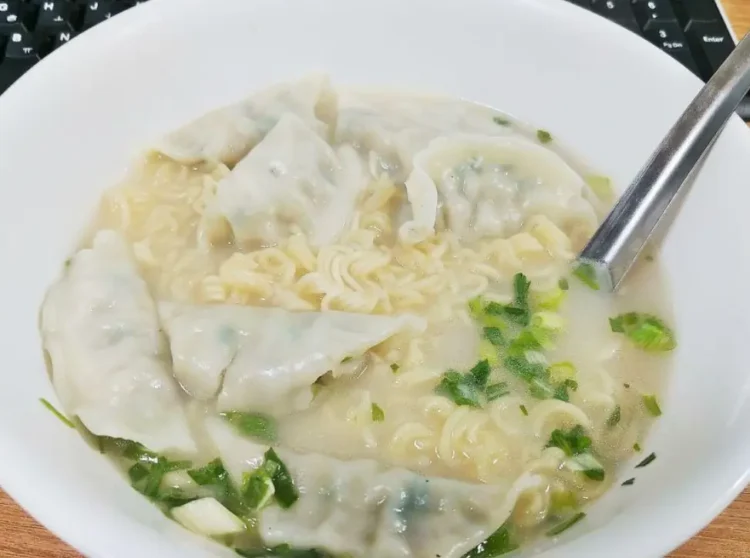
Sari Gomtang Ramen With Dumplings
For a milder bowl, there’s the sari gomtang dumpling soup. Insight lists it as a combination that needs only a cup of Sari Gomtang ramen and store-bought dumplings. Prepare the ramen according to the cup instructions. Add the dumplings and heat them according to the package directions, making sure they are hot all the way through. Dumpling packs differ, so follow the heating time on the pack you buy.
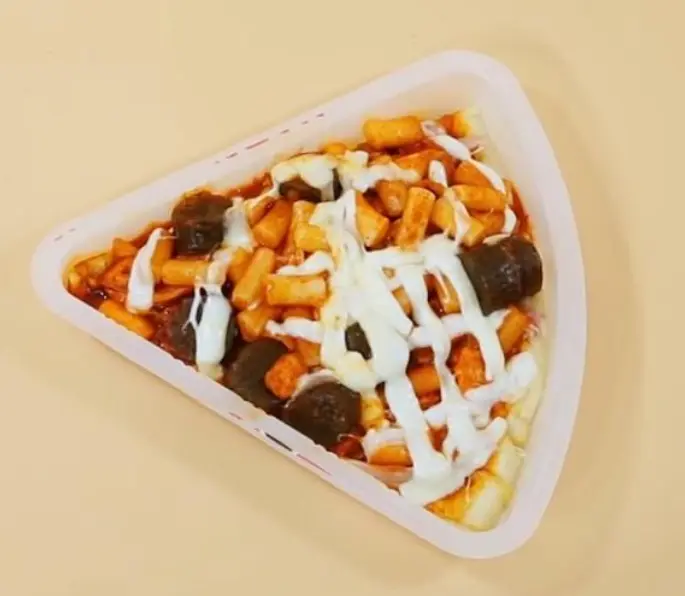
The Banzz Set
The Banzz set mixes a pizza slice, instant tteokbokki, smoked chicken, string cheese and, if you like, ketchup, according to the Korea Herald. Heat the pizza, tteokbokki and chicken separately, then top the pizza with the cheese, chicken and tteokbokki and stir it together with a spoon. It’s the heaviest of these four.
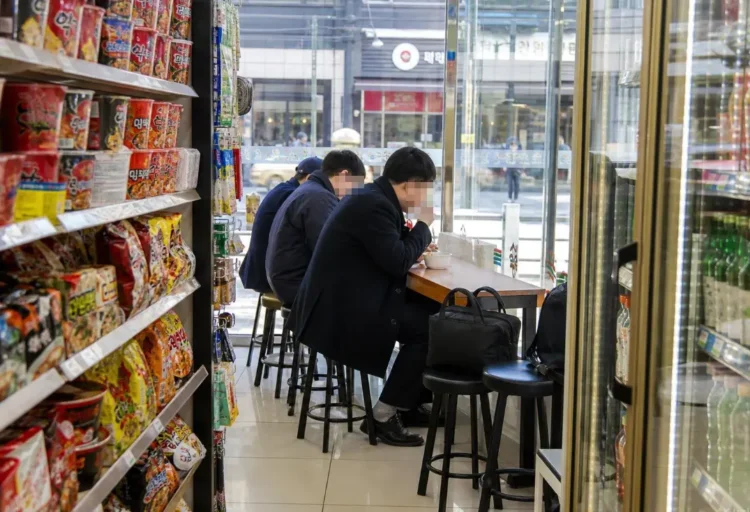
Microwave and Seating Notes
Convenience store microwaves put out more power than most home ones. Nongshim’s Shin Ramyun Black cup, for example, lists separate cooking times for a 1,000W convenience store microwave and a 700W home one. If a label is only in Korean, look for the numbers next to “W” and pick the one that matches a store. When there’s no wattage listed, start short, then add 10 seconds at a time.
Seating varies. Korea by Bike notes that most stores keep a microwave somewhere inside and larger ones have a small kitchenette area for customers. Small stores, such as many near tourist spots, may have no table at all, so you may end up carrying your food back to your room. Many stores also ask you to sort cups and wrappers, so look for a broth drain or ask the staff where leftovers go.
If you end up standing in front of the microwave with a cup that’s too spicy, the person behind the counter may have a fix of their own. Mine did.
Articles you might find helpful:
- Banchan Refill Etiquette in Korea: What’s Free, What Costs Extra, and How to Ask
- How to Use the CatchTable App in English: Sign-Up, Waiting, and Reservations
- Halal Food in Seoul: A Practical Itinerary for Muslim Travelers
- Korean Pojangmacha Guide: Cash, Ordering, and Manners
- How to Eat Ganjang Gejang: Shell Rice, Safety, and Getting Past the Fishy Smell