Korean Side Dishes – What Foreigners Always Misunderstand About Banchan
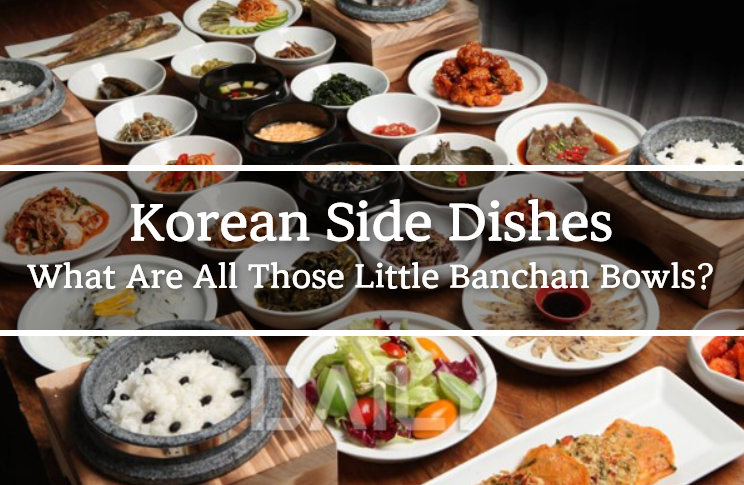
Korean Side Dishes – What Are All Those Little Banchan Bowls?
I’ve watched plenty of foreign friends sit down at a Korean restaurant for the first time and freeze completely. Before the main dish even arrives, five, six, sometimes eight little bowls show up out of nowhere. Nobody explains anything. They just stare at them, chopsticks in hand, unsure whether to dig in or wait for something official to start.
As a Korean, I’ve seen this exact confusion play out constantly. So let me clear up what those bowls actually are, and where visitors usually get it wrong.
The Biggest Misunderstanding: Treating It Like a Separate Course
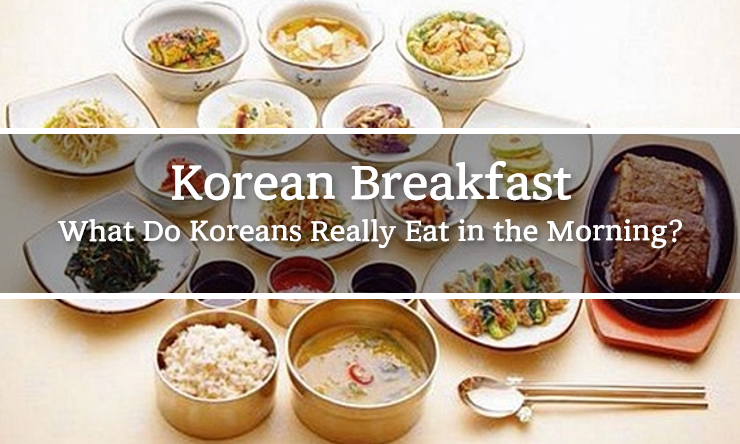
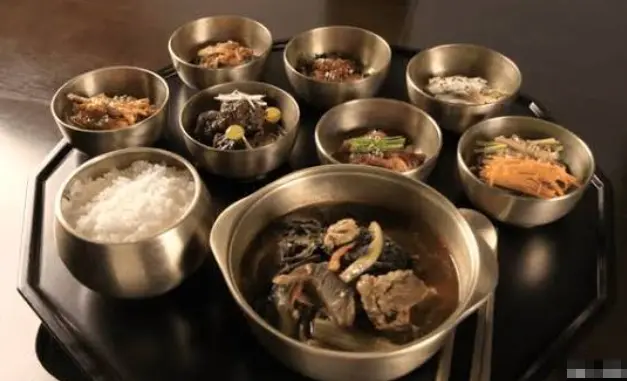
Those little bowls are called banchan, and they simply mean “side dish” in Korean. But calling it a side dish undersells it completely. In Western meals, a side dish is often an afterthought. In Korea, banchan is the backbone of the whole table.
The Mistake: Eating Each Dish One at a Time
This is the number one thing I see. Foreign guests often treat every banchan like its own separate course, finishing one before moving to the next. That’s not how it works. A Korean meal is built around rice, soup, and a rotating cast of small dishes eaten together in a rhythm, not a sequence. You take a bite of rice, then banchan, then soup, then back to rice again.
👉 Side Dishes – The Korean Kitchen on NAVER
Why Korean Meals Come With So Many Side Dishes
There are real reasons behind this, and foreigners often assume it’s just tradition without understanding the logic.
It Comes From Old Farming Life
Korea’s banchan culture goes back centuries, tied closely to farming seasons. Vegetables had to be preserved before refrigerators existed. Fermenting, pickling, and salting turned a short harvest into food that lasted through winter. That habit never really disappeared.
It Balances Out Every Meal
Rice and meat alone can feel heavy after a while. Banchan brings in fiber, acidity, and sharp flavors that cut through richness. A spicy stew suddenly feels lighter with a cool cucumber side next to it. Nothing on the table is random.
It Reflects Korean Hospitality
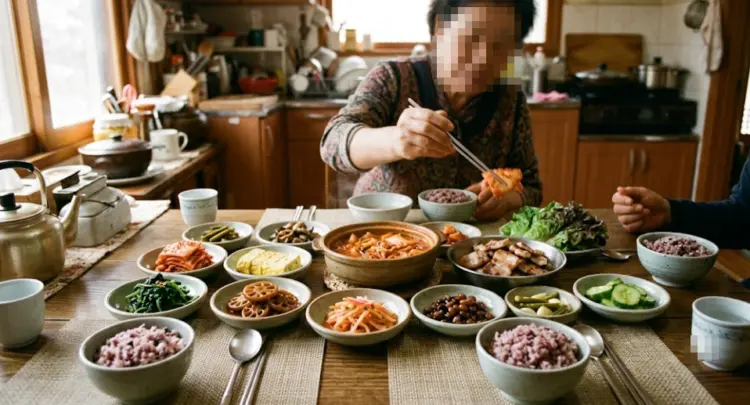
Serving a table with only one dish can feel stingy in Korean culture. Banchan shows generosity without needing an enormous main course. Even a simple home dinner ends up looking like a small feast.
Korean Side Dishes – The Banchan You’ll See Everywhere
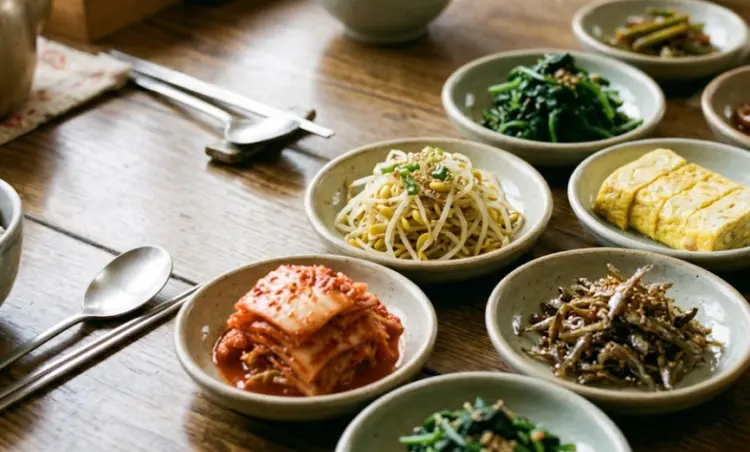
- Kimchi – fermented, spicy, slightly sour, and basically non-negotiable
- Kongnamul muchim – seasoned soybean sprouts, light and nutty
- Gyeranmari – a rolled egg omelet, soft and mild
- Myeolchi bokkeum – tiny stir-fried anchovies, sweet and crunchy
- Sigeumchi namul – seasoned spinach with sesame oil
Some restaurants rotate their banchan by season. Others keep the same five or six regulars forever. Either way, you rarely order these separately. They just show up, and that catches a lot of visitors off guard the first time.e five or six regulars forever. Either way, you rarely order these separately. They just show up.
The Mistake: Assuming Banchan Costs Extra
This is probably the most common misunderstanding I see among first-time visitors. They assume more dishes mean a bigger bill, so they hesitate to touch half the table.
Banchan is almost always included with your main order, at no extra charge. Most casual restaurants even offer free refills once a bowl is finished. Asking for a kimchi refill is completely normal here, and no server will think twice about it.
This is very different from a lot of Western dining, where every extra item adds to the bill. In Korea, the more banchan on the table, the more a restaurant is quietly showing off its hospitality.
Recommended Reading
👉 10 Korean Foods Every Foreigner Should Try in Korea (I’ve Eaten Every Single One)
How Foreigners Should Actually Approach Banchan
There’s no strict rulebook, but a few habits make the experience smoother for visitors.
Start with a small taste of each dish before committing to seconds. Some banchan are intensely spicy or salty, and a full bite without warning can catch you off guard. Pair contrasting flavors together, like something spicy with something cool, since that balance is really the whole point.
Also, don’t feel pressured to finish every bowl. Locals rarely clear every plate completely, especially with shared side dishes. It’s about variety, not volume, and foreigners often over-apologize for leaving food behind unnecessarily.
Banchan reflects something bigger than table manners. It shows that a meal doesn’t need one hero dish to feel complete. Sometimes the best food experience comes from a dozen small, thoughtful pieces working together.
So next time you sit down at a Korean table and see those little bowls multiply in front of you, don’t panic. Just start tasting. Understanding banchan properly turns a confusing first impression into one of the best parts of eating in Korea.