

Why Do Koreans Take Off Their Shoes Indoors? (A Real Visitor’s Story)
Why Do Koreans Take Off Their Shoes Indoors?
If you’ve ever visited Korea, you’ve probably noticed something right away. Nobody wears shoes inside a home. Not even for a five-minute visit. As a Korean, I’ve watched more than a few foreign friends walk straight through my front door in their sneakers, completely unaware they’d just crossed a line.
It’s not their fault. Nobody warns you about this before you land in Korea. So let me break down why this custom exists, and where I’ve seen visitors slip up the most.

The Most Common Mistake Foreign Visitors Make
The biggest mix-up I see happens right at the entrance. Most Korean homes have a small, lowered area just inside the front door. We call it the “hyeongwan.” Shoes come off there, and only then do you step up into the main living space.
That small step isn’t just decoration. It’s an actual physical boundary. Outside stops at that step. Foreign guests often miss this detail entirely and just keep walking, shoes and all, straight into the living room.
Why Koreans Are So Strict About This Rule
This isn’t just an arbitrary habit. There’s real history and logic behind it.
Reason 1: Traditional Floor Heating (Ondol)
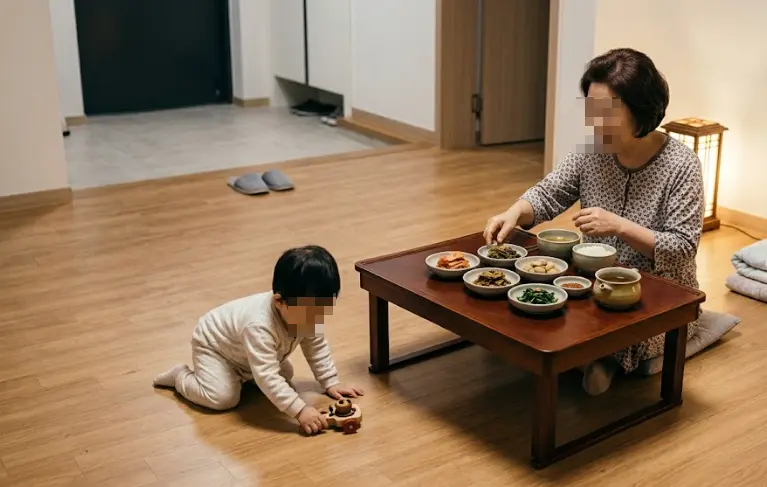
Korean homes have long used a heating system called “ondol,” where heat rises directly from the floor. Families used to eat, sit, and sleep right on that warm floor. Bringing in outdoor shoes covered in dirt was never going to work with that kind of lifestyle.
Reason 2: Floor-Level Living
Even today, a lot of Korean households eat meals at a low table while sitting on the floor. Kids crawl and play there too. Keeping that floor clean isn’t optional. It’s basically the foundation of daily home life.
Reason 3: A Clear Line Between Outside and Inside
There’s also a mental boundary at play here. Outside is shared, public, and a bit messy by nature. Inside is private and personal. Taking your shoes off marks that shift every single time you walk through a door.
👉 [Check Korean etiquette guidelines on the Encyclopedia of Korean Folk Culture website]
Other Mistakes I Often See From Visitors
Shoes at the front door are just the beginning. Here are a few more slip-ups I’ve noticed over the years.
Not Realizing the Rule Applies Beyond Homes
A lot of foreign guests assume this rule only applies to private houses. It doesn’t. You’ll also need to take your shoes off at:
- Traditional Korean restaurants with floor seating
- Temples and temple stay programs
- Hanok stays and certain guesthouses
- Jjimjilbangs and some saunas
- Yoga or meditation studios
Wearing Socks With Holes (Seriously)
This one always gets a laugh. Since you’ll be walking around indoors in just your socks, plenty of visitors get caught off guard by their own socks. My advice? Always bring a clean, hole-free pair when you’re heading somewhere shoes-off is expected.
Missing the Slippers by the Door
Many homes and businesses leave a pair of indoor slippers right past the entrance. Foreign guests sometimes walk right past them, not realizing they’re meant to be worn. If you see a shoe rack or a row of slippers, that’s your cue.
A Few Tips If You’re Visiting Korea
- Wear slip-on shoes when you can. It saves time and awkward fumbling at the door.
- Pack clean socks, always.
- Watch what locals are doing if you’re ever unsure.
- Don’t take it personally if someone corrects you. It happens to almost every visitor at least once.
Recommended Reading
👉 10 Korean Customs Every Foreigner Should Know Before Visiting Korea
👉 10 Korean Foods Every Foreigner Should Try in Korea (I’ve Eaten Every Single One)
The Bigger Picture
Honestly, this custom isn’t really about shoes at all. It’s about respect, cleanliness, and understanding where public space ends and personal space begins. Once you get it, it becomes second nature fast. And trust me, Koreans genuinely appreciate visitors who make the effort to get it right.