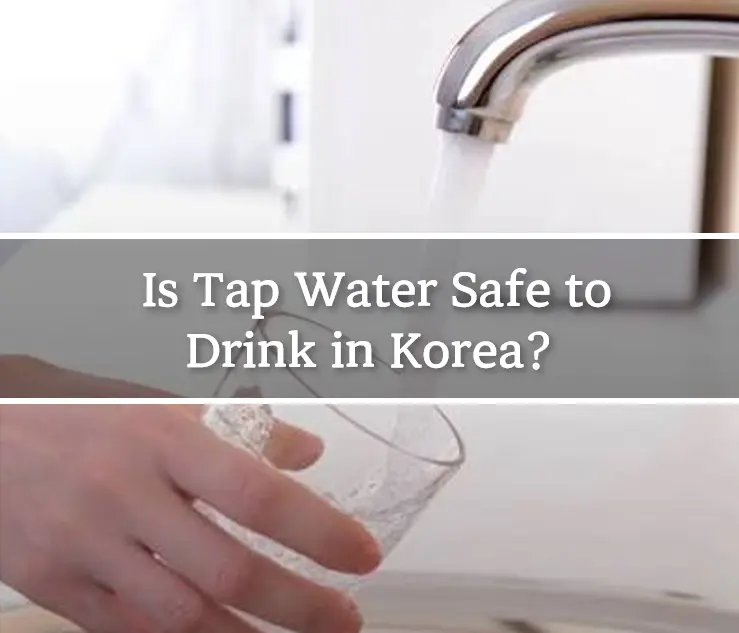
Is Tap Water Safe to Drink in Korea? What Actually Happens at Restaurants
A friend from overseas once filled her water bottle from the tap in her hotel room and then asked me, “Is this actually safe to drink?” I remember hesitating because the answer isn’t quite as simple as yes or no.
The water is considered safe, but most Koreans have their own reasons for not drinking it straight from the faucet.
So, Is the Tap Water Safe?
Korea’s tap water meets the country’s drinking water standards, and the water treatment system itself is generally considered reliable. Seoul has even spent years encouraging people to drink tap water directly. You may also see the name Arisu used for Seoul’s tap water.
Most people still don’t drink it straight from the tap, though. For many people, the concern isn’t really the water treatment plant. It’s the pipes in an older apartment building. Water can pick up a taste or smell somewhere between the treatment plant and a specific building, especially in older neighborhoods.
So yes, the treated water itself is generally safe. The hesitation comes from what happens after that, especially in older buildings.
What Locals Actually Do Instead
Boiling water is still pretty common, especially in older households. A pot of water goes on the stove, sometimes with a bit of barley or corn tea added. Once it cools down, we usually keep it in a bottle in the fridge and drink it throughout the day.
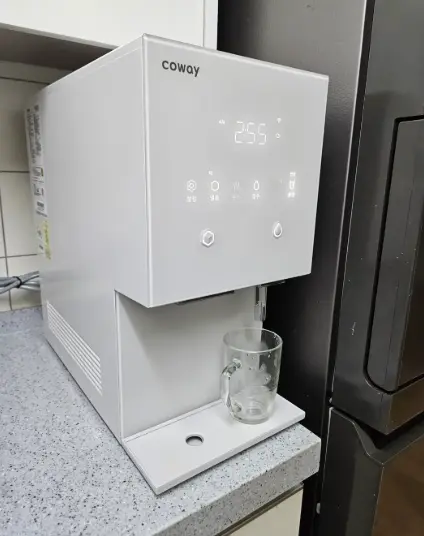
You’ll see water purifiers (정수기, jeongsugi) everywhere in Korea. They’re in homes, offices, restaurants, and even some public places. Many families rent them instead of buying one. A technician usually comes by from time to time to replace the filters. They’re so common that nobody really thinks twice about having one in the kitchen.
Then there’s bottled water. You can find it at pretty much every convenience store, and it’s cheap enough that a lot of people simply buy it out of habit. Some people default to it just out of habit, without really thinking about whether the tap would’ve been fine.
I actually don’t drink straight tap water myself. I know it’s considered safe, but I’ve never really gotten into the habit. I grew up drinking filtered water, so that’s still what I reach for at home.
How Restaurants Handle Water
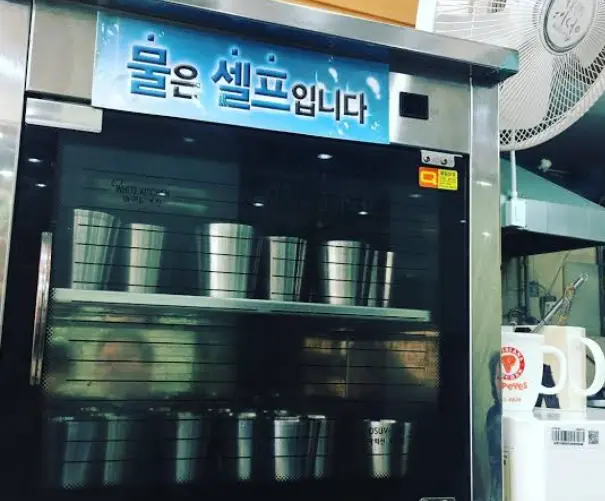
Restaurants are a little different. In many Korean restaurants, you won’t have someone bring water to your table right away. You usually get it yourself. There’s a self-serve station near the entrance or against a wall — a water dispenser, sometimes attached to a purifier, with a stack of metal or plastic cups next to it.
Just grab a cup, fill it up, and go back to your table. Nobody really thinks anything of it. If I’m eating with my family, there’s a good chance one of us will end up doing the same thing before the food comes out.
Barley tea (보리차, boricha) shows up instead of plain water fairly often, particularly at older or more traditional restaurants. It’s served cold in the same self-serve setup, sometimes in a large kettle rather than a water dispenser. It has a very mild, slightly roasted taste. If you’ve never had it before, you might honestly think it’s just water at first.
At nicer restaurants, someone may bring water directly to your table. It’s usually filtered water rather than water poured straight from the kitchen tap.
What About Ice?
As for ice, it’s generally made with filtered or purified water as well. It’s not something most people give much thought to.
You might also like:
👉 Korean Drinking Culture – Rules Foreigners Often Get Wrong
👉 What Is Bulgogi? The Real Story Behind Korea’s Most Famous BBQ Dish
What I’d Do as a Visitor
If your hotel has a water purifier, I’d just use that. If there’s only an electric kettle, boiling the water is another easy option.
And honestly, if you don’t want to think about it, just buy a bottle of water at a convenience store. They’re everywhere.
If a restaurant only has a water dispenser and cups rather than table service, that’s completely normal — it’s not a sign of anything unusual, just how most places handle it here.
One last thing: if someone gives you a slightly brown drink that tastes a little nutty, don’t worry. That’s probably boricha. It’s supposed to look like that.