
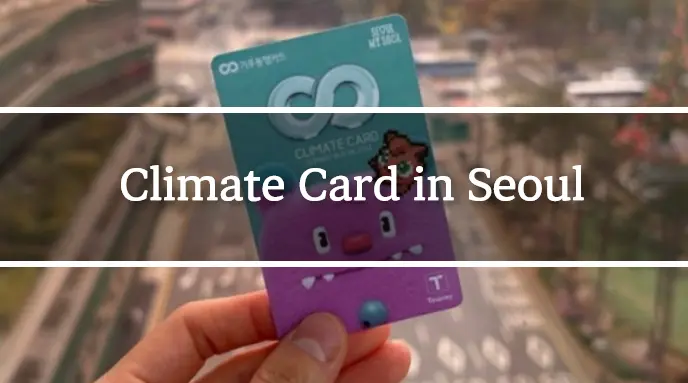
Climate Card in Seoul – What Foreign Visitors Actually Need to Know About the Short-Term Passes
I remember seeing a tourist get stuck at Euljiro 3-ga station because her Climate Card wasn’t working the way she expected. A station worker had to walk over and explain that she needed to pay the fare difference, since she’d ridden past the covered zone without realizing it. It wasn’t a big deal, but she looked pretty confused about why a “one price, unlimited rides” card would suddenly ask for more money.
And honestly, that’s probably the easiest way to explain the Climate Card to a first-time visitor. The problem is that there are a few rules you usually don’t find out about until you actually need to use the card.
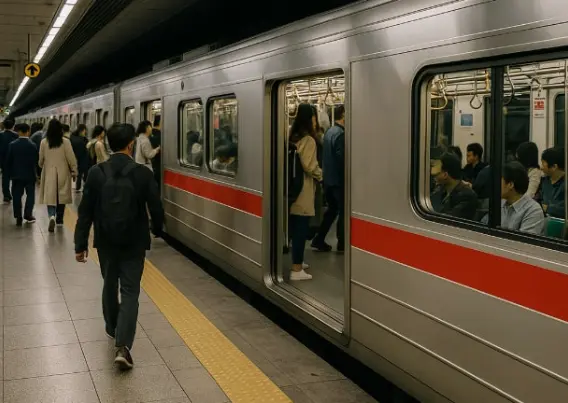
So, What Do You Actually Get?
The Climate Card isn’t really a tourist product to begin with — it started as a regular commuter pass for Seoul residents. But since mid-2024, there’s a short-term version made for people who are only in town for a few days: 1-day, 2-day, 3-day, 5-day, and 7-day passes. You load one fare, and for however many days you picked, you can ride Seoul’s subway and Seoul-licensed city and village buses as many times as you want.
The short-term passes range from 5,000 won for one day to 20,000 won for seven days. If you’re using the subway or bus several times a day, the pass can become cheaper than paying for each ride separately.
The card itself is a separate cost — about 3,000 won, paid once, for the plastic. Locals often use a mobile version on their phones, but that option isn’t open to foreign visitors right now. You’ll need the physical card, but that’s not really a problem. You just tap in and out like you would with a regular T-money card.
Where the Coverage Actually Stops
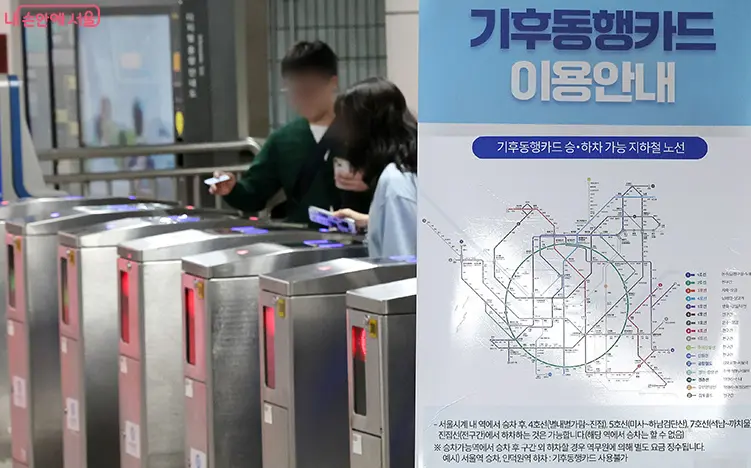
In simple terms, it works on most Seoul buses and subway routes you’ll probably use as a tourist. But there are some exceptions, and this is where things get a little confusing.
The card covers the Seoul subway system and buses licensed by the city of Seoul, including the late-night buses and neighborhood shuttle buses. It doesn’t cover the Sinbundang Line, buses licensed by other cities or provinces, or the intercity and wide-area buses that go into Gyeonggi-do.
The confusing part is that some subway lines continue outside Seoul. If you tap in somewhere your card covers and tap out somewhere it doesn’t, a staff member collects the fare difference on the spot. You don’t get a penalty for this. You simply pay the extra fare. Still, it’s something to know because the Climate Card doesn’t mean you can travel anywhere in the Seoul metropolitan area for one fixed price.
I recommend checking your route first, especially if you’re traveling toward the edge of Seoul.
Buying and Topping Up
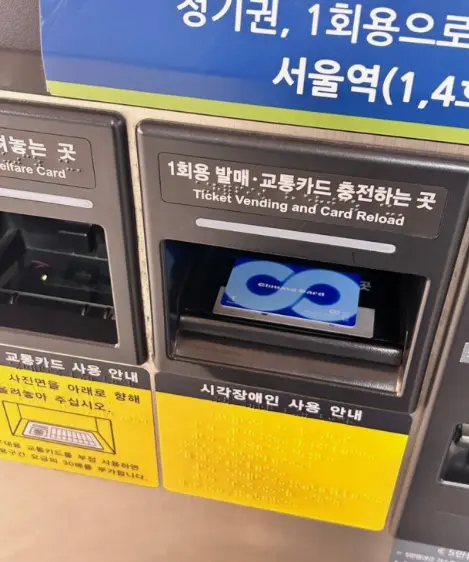
You can pick up the physical card and load a pass at the newer touchscreen ticket machines inside subway stations on Lines 1 through 8. On some of the newer lines — Line 9, Ui-Sinseol, Sillim — the machines aren’t as common inside the stations themselves, so the card is often sold at convenience stores near those station entrances instead.
There is one important difference from the old 30-day pass. You can’t pre-load a short-term pass to start on a future date. Whatever day you charge it is the day it starts counting, and it runs by calendar days, not by the hour. So if you activate a 3-day pass late at night, you can lose most of that first day. That’s why I would start it in the morning if possible.
Recharging works fine if you want to switch to a new pass once your current one runs out, but you can’t change the pass length in the middle of a cycle. If you’re on a 3-day pass and want more time, you wait until it expires and then buy a new one.
Paying Without Korean Cash
Payment is easier now than it used to be. In the past, visitors generally needed Korean won to buy or recharge the card. As of March 17, 2026, the newer machines at those 273 stations across Lines 1 through 8 accept foreign-issued Visa, Mastercard, and other major cards, plus KakaoPay and NaverPay.
There is a service fee attached when you use a foreign card, somewhere around 3.7 percent. The fee isn’t very large, but keep it in mind when you pay with a foreign card. If you’d rather skip it, cash still works exactly like before.
Refunds, and the Part People Forget About
If you load a pass and don’t use up the full value, there’s a way to get a partial refund — but only before the pass expires. Once it expires, that’s it, no refund, even if something went wrong with the card itself. And if you’re a foreign visitor without a Korean bank account, refunds through the automated system mostly don’t apply to you anyway. You’d need to go in person to T-money’s head office and get it back in cash. So while a refund is possible, it may not be practical if you’re leaving Seoul soon.
About the 30-Day Version
You may also come across older information about a 30-day Climate Card. That version is being phased out — recharging stopped at the end of July 2026, and the last loaded passes ran out by late August. This does not affect the short-term passes for visitors. I only mention it because a lot of older guides still describe both versions side by side, and it’s easy to end up reading outdated information without realizing it.
So, Is It Worth Getting
If most of your trip is inside Seoul, I think the Climate Card is worth considering. It can save you money if you’re using public transportation several times a day. Where it stops making sense is if your plans involve day trips outside the city, like Incheon or Suwon, or anywhere that needs an intercity bus. In that case, paying per ride with a regular T-money card is simpler.
I still remember that situation at Euljiro 3-ga. She wasn’t wrong to be confused — the card really does work almost everywhere you’d expect, right up until it doesn’t. It’s worth checking the coverage before you travel. That way, you won’t be surprised if you take a route that isn’t covered.
Recommended Reading
👉 Best Time to Visit Korea – Weather, Festivals, and Travel Tips
👉 Seoul vs Busan – Which City Should You Visit First?